Last Updated on November 16, 2025 by Bianca Clinton, Partner at Clinton Consultancy – Qualified Solicitor (Ghana, England & Wales)
In today’s economic climate, debt recovery has become one of the most important — yet most misunderstood — aspects of doing business in Ghana. Every month, individuals, SMEs, and large corporations face the same challenge: how to recover money lawfully from clients, suppliers, or partners who fail to pay.
Having worked on numerous debt recovery and insolvency cases over nearly two decades, I have seen that while Ghana’s commercial environment is dynamic, the process of recovering debts can be complex without proper legal guidance. This is because enforcement procedures require strict compliance with Ghanaian law, particularly the Courts Act, the High Court (Civil Procedure) Rules, and the Corporate Insolvency and Restructuring Act, 2020 (Act 1015).
Why People Pursue Debt Recovery
People and companies pursue debt recovery for several reasons — not only to recover lost funds but also to preserve business relationships and deter future defaults. Typical situations include:
- Unpaid invoices or contracts where clients fail to honour payment terms.
- Loan defaults between private individuals or corporate lenders.
- Tenancy arrears, especially in commercial property.
- Partnership disputes, where one party withholds funds.
- Corporate insolvency, where creditors seek to recover before liquidation.
In each case, the law provides different remedies — some fast and amicable, others formal and court-based. The key is choosing the most effective approach for your situation.
At Clinton Consultancy, my team coordinates with the courts, bailiffs, and banks to ensure that successful judgments translate into real recoveries.
Why Debt Recovery in Ghana Requires a Lawyer
Unlike in many Western countries where debt collection agencies can operate independently, Ghana’s system requires legal expertise to navigate procedural timelines, registry filings, and court enforcement. A qualified lawyer ensures every step is compliant, enforceable, and strategically sound.
The involvement of counsel also prevents counter-claims or defamation risks that can arise when creditors act informally.
Why Clients Choose The Law Office of Clinton Consultancy
- Nearly 20 years of commercial and litigation experience
- Dual qualification in Ghana and England & Wales
- Deep understanding of Ghanaian court processes
- Ethical, strategic, and results-driven approach
If you have an unpaid debt, my advice is simple — act early, act lawfully, and act through counsel.
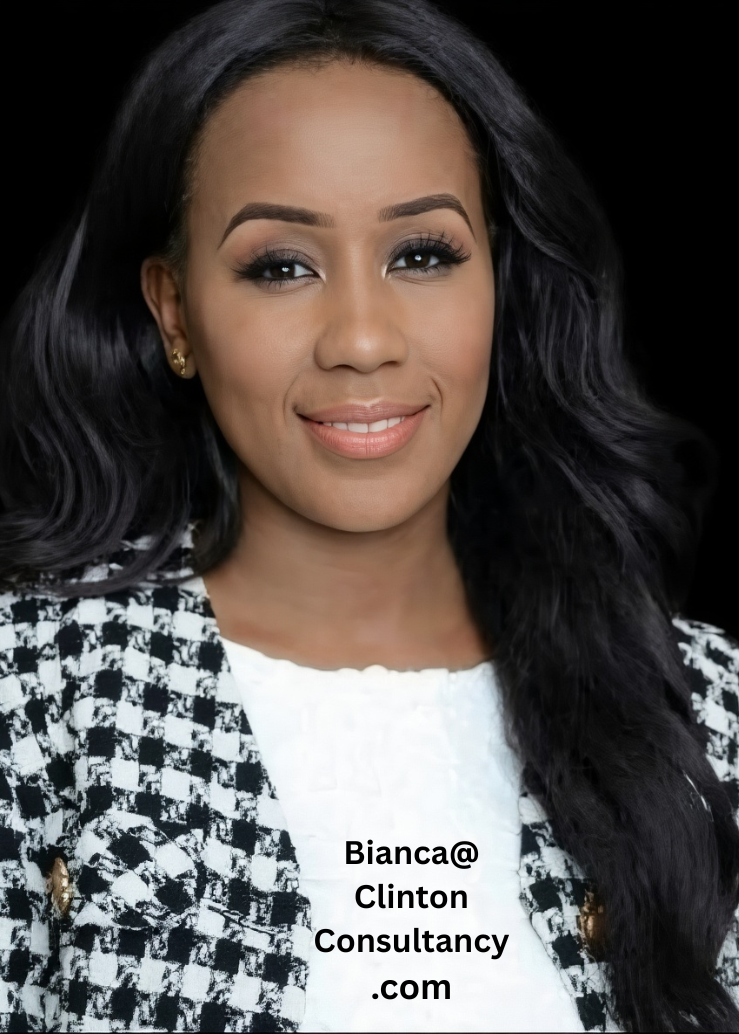
Bianca Akweley Clinton is an internationally recognised legal practitioner, dual-qualified as a Solicitor of England & Wales and a Barrister-at-Law in Ghana, with extensive experience advising clients across Africa and internationally on complex legal, corporate, and cross-border matters.
She is a Partner at The Law Office of Clinton Consultancy, an award-winning international law and advisory firm providing legal and strategic solutions to African and global clients in areas including shipping and maritime law, corporate and commercial transactions, investment structuring, mergers and acquisitions, immigration law, dispute resolution, regulatory compliance, due diligence, and international business advisory services.
Bianca has been recognised for her outstanding contribution to the legal profession as the recipient of the prestigious African Legal Icon Award by the Heritage Foundation, honouring her commitment to legal excellence, professional integrity, and the protection of clients’ interests across multiple jurisdictions.
Recent awards won by Bianca include:
December 2025 — Outstanding Woman in Corporate Risk and Strategic Advisory — Ghana Business Forum.
April 2026 — African Legal Icon — African Heritage Awards, Accra.
May 2026 — Clinton Consultancy received two African Excellence Awards: Best Global Cross-Border Legal Advisory Firm 2026 and Legal Excellence in Corporate Law 2026.
June 2026 — Global 100 – 2026 Awards: The Law Office of Clinton Consultancy recognised as Leading Firm in Law Practice in Ghana for 2026.
Under her leadership, The Law Office of Clinton Consultancy has received international recognition, including being named Leading Firm in Law Practice – Ghana at the Global 100 Awards 2026, alongside numerous other national and international recognitions for excellence in legal practice, strategic advisory work, and cross-border business support.
Through BiancaClinton.org, Bianca shares legal insights, professional commentary, and thought leadership designed to educate, inform, and support businesses, investors, institutions, and individuals navigating legal and commercial opportunities worldwide.
Through Clinton Consultancy’s expanding international network, the firm proudly serves clients through its flagship offices and operational presence in Ghana, Nigeria, Sierra Leone, the United Kingdom, South Africa and across global markets.
Contact Bianca Clinton Directly
📧Email: Bianca@ClintonConsultancy.com
🇬🇭 Ghana Office: +233 59 261 1535
🇬🇧 United Kingdom Office: +44 7425 700 696